

Search
Recent Posts
June 9, 2026 • 10 Minute Read
Help! There is a Verse Missing from My Bible!
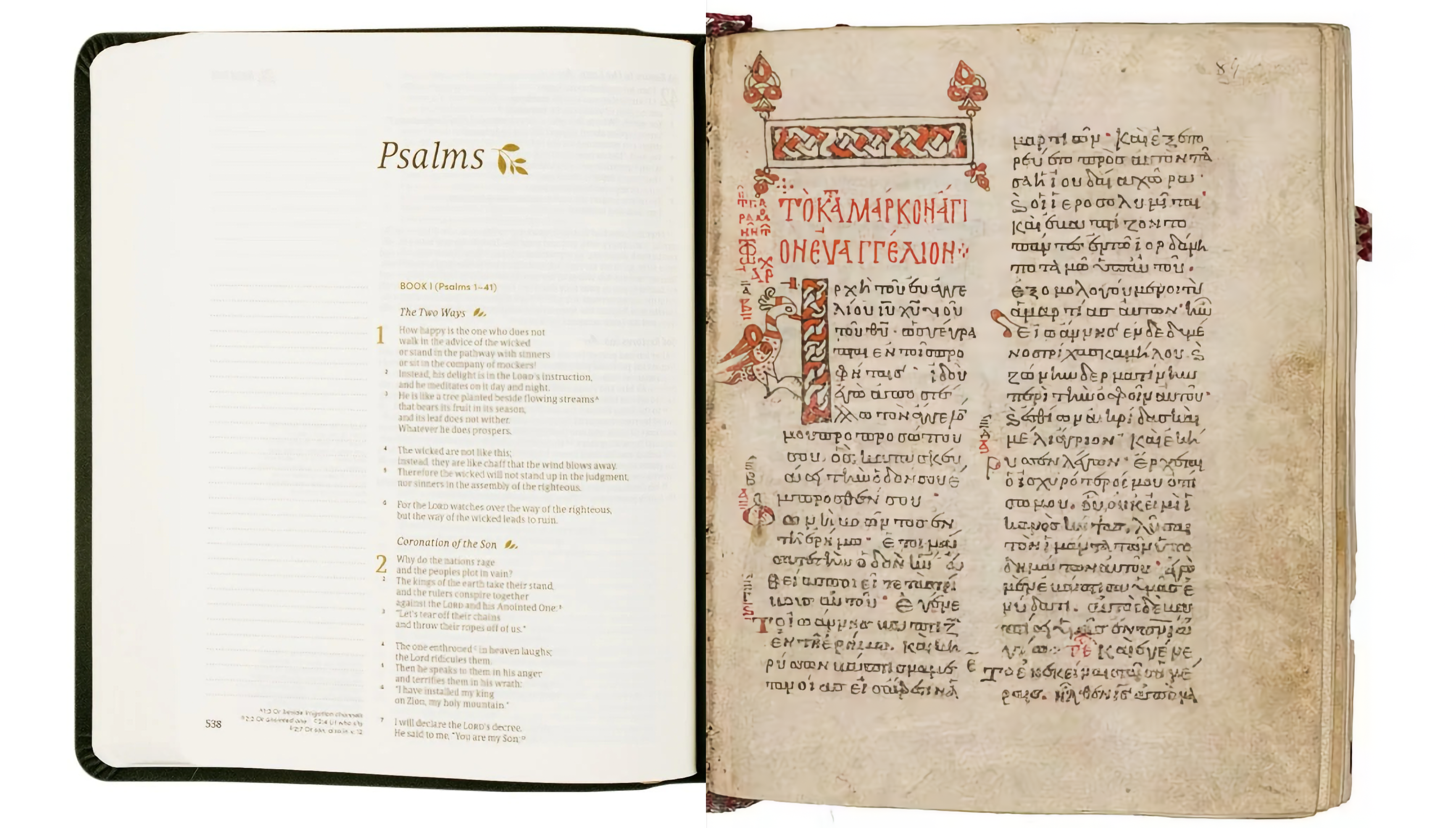
In studying to preach John 5:1-18, I discovered something I knew would cause confusion among my people. I preach from the ESV but as I consulted other translations in my study, I found that the King James has a verse that none of the more recent translations have. I went back to double check and sure enough the ESV verse numbers are 1, 2, 3…5. Because many in my congregation love the King James Version and would be following along with me in that translation, I knew it was not an issue I could ignore. Also, I knew that I would be having this conversation in John 8 where one of the longest variants in all the New Testament is found. So I am going to go ahead and tackle it so my church can understand what is going. Why is there a verse missing? UNDERSTANDING TEXTUAL VARIANTS John 5:1–9 (ESV) After this there was a feast of the Jews, and Jesus went up to Jerusalem. 2 Now there is in Jerusalem by the Sheep Gate a pool, in Aramaic called Bethesda, which has five roofed colonnades. 3 In these lay a multitude of invalids—blind, lame, and paralyzed. 5 One man was there who had been an invalid for thirty-eight years. 6 When Jesus saw him lying there and knew that he had already been there a long time, he said to him, “Do you want to be healed?” 7 The sick man answered him, “Sir, I have no one to put me into the pool when the water is stirred up, and while I am going another steps down before me.” 8 Jesus said to him, “Get up, take up your bed, and walk.” 9 And at once the man was healed, and he took up his bed and walked. Now that day was the Sabbath. John 5:1-9 (KJV) After this there was a feast of the Jews; and Jesus went up to Jerusalem. 2 Now there is at Jerusalem by the sheep market a pool, which is called in the Hebrew tongue Bethesda, having five porches. 3 In these lay a great multitude of impotent folk, of blind, halt, withered, waiting for the moving of the water. 4 For an angel went down at a certain season into the pool, and troubled the water: whosoever then first after the troubling of the water stepped in was made whole of whatsoever disease he had. 5 And a certain man was there, which had an infirmity thirty and eight years. 6 When Jesus saw him lie, and knew that he had been now a long time in that case, he saith unto him, Wilt thou be made whole? 7 The impotent man answered him, Sir, I have no man, when the water is troubled, to put me into the pool: but while I am coming, another steppeth down before me. 8 Jesus saith unto him, Rise, take up thy bed, and walk. 9 And immediately the man was made whole, and took up his bed, and walked: and on the same day was the sabbath. The KJV has a verse four while the other English translations do not. Why? This is a place where there is a textual variant: “a place in the Greek or Hebrew manuscripts where different readings exist.” We do not have any of the original autographs of the writings of Scripture. What we do have are thousands of copies that allow us to reconstruct with amazing certainty what those original writings said and, sometimes, did not say. This process is called textual criticism: “the unavoidable process of evaluating different manuscript readings in order to determine what the authors originally wrote.” Note the emphasis: every translator has to do this work, including the King James translators. The only way to translate the Bible is to rely on manuscripts and to judge the differences between those manuscripts. Let me illustrate how this process works. Let’s say Grandma has an original recipe and at one family reunion all the kids make copies of it. Then their kids and friends and family begin to make copies as well. Years later the original copy of grandma’s recipe is lost, but if you were to gather up the dozens of copies that were made over time, you would find two realities: One, is that the copies differ. There are misspellings, rewordings, and sometimes even notes written in the margins. In several of the copies, you could see where one particular copy had notes in the margin for clarity, but those who copied that copy inserted them into the recipe itself. Two, is that despite the differences, if you have enough copies, you can recreate the original with much confidence. That is because you can tell: 1) which things are the same across the copies, (almost certainly original) 2) which things are common (likely original, but indicating that perhaps a few of the copies left something out that should be in there), and 3) which things only appear in some of the copies (which could be good evidence that they were not part of grandma’s original recipe). UNDERSTANDING HOW GOD PRESERVES HIS WORD God’s inspiration of His Word is not mechanical. He did not drop it down from heaven into the hands of the prophets. He worked through human agency and personalities. Some of these men (Luke, for example) did research, gathered source material, and interviewed witnesses. Yet these men understood that through them God was at work to communicate exactly what He intended so that the resulting product is the very Word of God. This process may seem messy, but it is how God has chosen to work: through history, in real time and space, through human beings. We could argue that for something as serious as recording His Word, He should have made that neater, but He has also chosen to use men to preach His Gospel which brings eternal salvation. That is a big deal too and He chooses to use us! God’s preservation of His Word is not mechanical either. There is a human process at work to study languages, and to record and pass them down. There is a historical process as copies are discovered that give amazing confirmation to the preservation of God’s Word. We believe THAT God preserved His Word, but it needs to be understood HOW. The Chicago Statement on Inerrancy Article X states: “We affirm that inspiration, strictly speaking, applies only to the autographic text of Scripture, which in the providence of God can be ascertained from available manuscripts with great accuracy. We further affirm that copies and translations of Scripture are the Word of God to the extent that they faithfully represent the original.” The signers of this document were not even close to being liberals or progressives. In fact, the statement includes an article that affirms literal, six-day creation which is a pretty good test of biblical fidelity in an age where that position is challenged even in conservative circles. AN ARGUMENT FOR EXCLUDING THIS VARIANT Conservative scholar Leon Morris states concerning John 5:3b-4 that “the manuscript evidence makes it certain that this is no part of the original Gospel.” There is not much debate about this particular variant among those who study the manuscripts, but here are some things to consider in favor of omitting it. It is not found in the earliest or best manuscripts. No Greek manuscripts before 400 AD contain this verse. That means it does not appear until 300 years after the Gospel was written. To go back to the recipe, if none of the kids and grandkids copies contain this ingredient and it doesn’t show up in any recipes until the great-great grandkids and later, the reasonable conclusion is that it is not original and that it was inserted into the stream of passed down recipes at a later point. It contains language not typical of John. There are three words in these verses that only appear here and nowhere else in the Gospel. That is unusual to say the least. It contains theology not found elsewhere in Scripture. God’s healing is not a lottery or a gimmick, and it is certainly never given to those who can show their merit by “reaching it first.” God heals the weak, helpless, and undeserving based on His mercy. If this verse is included, the message indicates an affirmation of the reality of the superstition, not just a reflection of the beliefs of the time. That is problematic. It is easy to understand a motive for scribal addition. It was likely added by a scribe at some point in the transmission process to explain what was believed by the people at that time. HAVING CONFIDENCE IN THE WORD OF GOD Major variants are rare. There are thousands of variants, but most are minor: issues of spelling, word order, punctuation that have no effect on meaning. There are only a handful of places where there is dispute about whole verses or passages. We will have this discussion again in John 8 where one of two major New Testament variants appears. We know where there are variants: We don’t have to wonder while reading through our Bibles if there is a major variant on every page or whether we need to study to see what is original. The major variants are obvious in light of the vast manuscript evidence available. They have been discovered, tested, and debated. Most English translations of God’s Word mark and note these major variants. They aren’t secret. There is no conspiracy: The King James translators included textual variants in their margins: “Some peradventure would have no variety of senses to be set in the margin, lest the authority of the Scriptures for deciding of controversies by that show of uncertainty, should somewhat be shaken. But we hold their judgment not to be so sound in this point.” If modern English translations were trying to change doctrine by their omissions, they did a terrible job! There are differences because these translations are doing their best to reflect what the original autographs said. No more, no less. God Has Promised to Preserve His Word Matthew 24:35, “Heaven and earth will pass away, but my words will never pass away.” 1 Peter 1:23-25, “since you have been born again, not of perishable seed but of imperishable, through the living and abiding word of God; for “All flesh is like grass and all its glory like the flower of grass. The grass withers, and the flower falls, but the word of the Lord remains forever.” And this word is the good news that was preached to you.” The caution is to avoid making these verses promise something that God is not promising by taking it as a guarantee of a perfect, particular English translation of God’s Word thousands of years in the future. (If that is a case, what a shame for everyone before 1611 who apparently did not have God’s Word, and for everyone still today who does not speak English!) But the church must fully affirm and embrace the promise of God that He has preserved His Word. Speaking pastorally and personally, if I did not believe the Word of God was authoritative, inerrant, and infallible I would not waste my time week in and week out laboring to bring it to bear on the lives of my church family. I have this conversation not to create doubt, but to bring clarity. If you do not hear these issues faithfully explained from those who love the Word of God, I guarantee that you will hear them manipulatively used to attack God’s Word by those who reject it.


Copyright 2026 Heritage Free Will Baptist
All Rights Reserved.